
The whole purpose of a fall is often to prepare the way for a spiritual climb. The intention is to give you a jolt in order that you marshal all your strength and focus your entire consciousness on serving God. For the essence of the service of God is to find new life and new strength every moment of the day.
Rebbe Nachman of Breslove, Restore my Soul, page 48
We can analyze the moment of transformation from the perspectives of before change happens, during, and after.
Before transformation, there is a gradual process of deciding to transform, a beautiful process of transitioning. Motivational interviewing and the trans-theoretical model of change (TTM) explain this as a progression:
The notion that behavior change involves a process that occurs in increments and that involves specific and varied tasks is at the heart of the transtheoretical model of intentional human behavior change (TTM). This model offers an integrative framework for understanding the process of behavior change whether that change involves the initiation, the modification, or the cessation of a particular behavior. The stages of change represent a key component of the TTM and describe a series of stages though which people pass as they change a behavior. In this model change is viewed as a progression from an initial precontemplation stage, where the person is not currently considering change; to contemplation, where the individual undertakes a serious evaluation of considerations for or against change; and then to preparation, where planning and commitment are secured. Successful accomplishment of these initial stage tasks lead to taking action to make the specific behavioral change; if successful, action leads to the final and fifth stage of change, maintenance, in which the person works to maintain and sustain long-term change (DiClemente & Prochaska, 1998; Prochaska, DiClemente, & Norcross, 201 1992). These stages appear to be applicable to the larger process of behavior change, whether that change occurs with or without the help of a therapist, an intervention, or a treatment program. Research has isolated the stages of change across a range of health risk and health protective behaviors. Application of these stages and support for the varied aspects of the process of change represented by these stages have been demonstrated in many behavior changes from cessation of smoking, alcohol, and drugs to mammography screening, dietary modification, gambling, exercise adoption, and condom use and pregnancy prevention (Carney & Kivlahan, 1995; DiClemente & Hughes, 1990; DiClemente & Prochaska, 1998; DiClemente, Story, & Murray, 2000; Glanz et al., 1994; Grimley, Riley, Bellis, & Prochaska, 1993; Isenhart, 1994; Marcus, Rossi, Selby, Niaura, & Abrams, 1992; Weinstein, Rothman, & Sutton, 1998; Werch & DiClemente, 1994; Willoughby & Edens, 1996). Thus, although the behavior change targets differ, the structure of the change process appears to be the same. Individuals move from being unaware or unwilling to do anything about the problem to considering the possibility of change, then to becoming determined and prepared to make the change, and finally to taking action and sustaining or maintaining that change over time.
DiClemente, C. C., & Velasquez, M. M. (2002). Motivational interviewing and the stages of change. Motivational interviewing: Preparing people for change, 2, 201-216.
Rebbe Nachman describes the process of preparing to do Teshuva, or repent, which is the process when one often makes behavioral changes:
For the meaning of EHYEH is “I am prepared to be.” That is, before repenting a person does not yet have being. It is as if he does not yet exist in the world. Indeed, he would be better off had he not been created (Tractate Eruvin 13b). But when he prepares to purify himself and repent, he is then in the aspect of EHYEH. In other words, he will then exist in the world i.e., “I am prepared to be.”
LM 6:2
During transformation there are often feelings of destabilization and shame. Why?
There is an experience that happens many time in life. Right when things get really rough, we find ourselves growing. At the same time, when things feel like they are down or at their worst, we rise up to our strongest. Why does it seem like we are failing when we are succeeding?
When a man has to rise from one level to the next, prior to his ascent he must first undergo a descent. The paradox is that the very purpose of the descent is the ascent. From this you can see how much strength is required in the service of God. Even when you fall or descend in any way, you must never allow yourself to be thrown off balance to the extent that you come to look down upon yourself or hold yourself in contempt. You should refuse to dwell on the matter even momentarily. Regardless of what happens to you, in the end you will find that all your descents will be turned into great ascents and achievements, because the purpose of the descent is the ascent.
This point needs a lot of emphasis. Because everyone who experiences a spiritual fall imagines that this idea was never intended to refer to his particular case. He thinks it applies only to people on the highest plane who are perpetually climbing from level to level. You should know and have faith that in truth, all these words are spoken with even the worst and most insignificant of men in mind, because God is good to all.
Rebbe Nachman of Breslove, Restore my Soul, page 8
Dr. Diana Fosha created AEDP, Advanced Experiential Dynamic Therapy. One of the ideas discussed is the experience of growth and change. The moment of transformation is an experience with its own unique stress. Fifteen minutes into this video Dr Fosha explains it beautifully;
“Very often, the experience of having the undreamed of empathy; changing when you didn’t think that change was possible; or healing when you were just about to give up; that those kinds of experiences, (and again I will reference your own personal experience), is that very very often having something and having it and feeling it it in your body, makes you all too aware of not having had it. That having the content really puts you in touch with the deprivation and with the loss. The second of our transformational processes (we call this meta-therapeutic processing, in that we’re processing what’s therapeutic about therapeutic experiences) is mourning the self; and emotional pain is the affect that characterizes it; it’s mourning the self. It’s the grief we usually have about the loss of the other; it’s applied to the self, and we call it emotional pain.”
After loss, we know we need dedicated time to process our grief so that it does not turn from sadness into depression. We similarly need to allow for time and space to process the trauma of growth. We need to mourn the loss of the previous self, and the pain of seeing ourselves through the well meaning, growth intended, lens of, unintentional, critical judgement. As we grow into ourselves we learn we can soften these harsh lenses that were designed at a younger age to protect us. For more on Teshuva (Repentance) as a grief process, see this article.
“And though broken-heartedness, too, is very good, nevertheless, that is only for a brief period. It is right to set aside for oneself some time in the day for feeling remorse and speaking one’s piece in the presence of the Blessed One, as is brought in our works. But the entire [rest] of the day one needs to be happy. For broken-heartedness more easily leads to depression; than erring through joy, God forbid, leads to some sort of frivolity, God forbid. For this is the more likely: that broken-heartedness will lead to gloom.
One should therefore always be happy, and only at the designated time have a broken heart.
Rebbe Nachman, LM 2:24:2
Rebbe Noson adds: The Rebbe (Rebbe Nachman) emphasized this many times, telling us not to be brokenhearted except for a fixed time each day, during hitbodedut. Other than during that period, we should always be joyful and never depressed. The Rebbe explained that heartbreak is very different from sadness and depression: Heartbreak and depression are not at all the same. Heartbreak involves the heart, while depression results from melancholy and derives from the spleen. Depression is from the Other Side and is despised by God.
And the Rebbe taught: Depression is like anger and rage. It is like a complaint against God for not fulfilling one’s wishes. But a broken heart is the emotion of a child pleading before his father. It is the feeling of a baby crying and complaining because his father has left him.
Rabbi Nachman’s Wisdom #41-#42
Compare Rebbe Nachman’s above advice from 1802, to this 1999 paper on grief studies:
“The task was to experience the pain of grief. We would argue the additional necessity to take time off from the pain of grief. Missing from other models is analysis of the cognitive processes regulating attention to these different aspects.
This, then, leads to a central component of the model that distinguishes it from classic stress-coping theory or the bereavement models mentioned above, namely, the dynamic process, postulated as fundamental to successful coping, called oscillation. This refers to the alternation between loss- and restoration-oriented coping, the process of juxtaposition of confrontation and avoidance of different stressors associated with bereavement. At times the bereaved will be confronted by their loss, at other times they will avoid memories, be distracted, or seek relief by concentration on other things. Sometimes there may simply be no alternative but to attend to the additional stressors ( e.g., managing household chores, or earning a living) . As such, this cognitive process is a regulatory mechanism that differs too from the ‘‘confrontation’’ versus ‘‘avoidant’’ coping strategies to be found in the general coping research literature (cf. de Ridder, 1997). Our formulation is a dynamic, back-and-forth process. Coping theorists, by contrast, operationalize confrontation versus avoidance as a way of coping reflecting a state or a trait.
Important to stress is the relationship between oscillation and mental and physical health outcome. It is postulated that oscillation is necessary for optimal adjustment over time. A number of reasons why this alternation should take place can be suggested. The person may choose to take ‘‘time off,’’ be distracted, or need to attend to new things, or at times it may be too painful to confront some aspect, leading to voluntary suppression or more involuntary repression. In contrast to classic psychoanalytic formulation, which emphasized the detrimental effects, the benefits of denial are acknowledged. This is provided that denial is not extreme and/or persistent. There is supportive evidence that it may be impossible to avoid grieving unremittingly without severe costs to mental and physical well-being, from which it would follow that oscillation is necessary. …Pathological forms of grieving can be seen as disturbances of oscillation: In these cases there is an absence of the type of confrontation-avoidance processing (oscillation) that is associated with adjustment.
Margaret Stroebe, Henk Schut (1999) the Dual Process Model of Coping with Bereavement: Rationale and Description
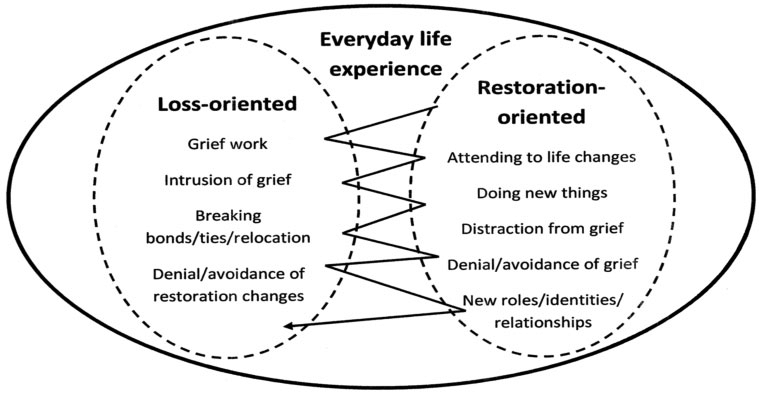
Stroebe and Schut 2001
Most people think of forgetfulness as a defect. I consider it a great benefit. Being able to forget frees you from the burdens of the past.
Rebbe Nachman, The Empty Chair, p. 108
For more on forgetfulness in rebbe Nachmans writings see here
During meditation, relaxed consciousness and reduced ego allow for increased awareness of self, which can lead to a momentary destabilization due to one’s increased negative awareness of ones struggles. The moment of feeling calm can allow one to suddenly realize the prior intensity of their non calmness. This is obviously not however a sign that they are worse then prior; this is just one’s consciousness expanding from restricted and constricted, to enlightened and expansive.
Despair must be totally ruled out! When a person begins to realize how far he is from God even if he feels he is at the farthest extreme from God, this should not be a reason for despair. On the contrary, it should be his consolation; that through this, he can revive himself. For now he is conscious of his distance. He might have been so far away that we would not have even been aware of the fact, but now he acknowledges it. Far he may be, but his very awareness of this is dear in the eyes of God. This in itself should give him strength and life.
LM 2:68, RMS p37
At the very moment that a person is rising to a level of greater holiness, for example when he is drawing closer to a true tzaddik, it can happen that all of a sudden the experience is something that is the very opposite of purity. Don’t lose heart because of this, it is a sign that you are coming closer to holiness. It can be a great good.
LM 2:217 RMS p.36
When learning and improving a new skill, one is always more aware of how much they didn’t know prior, immediately after learning a new technique. The new knowledge enlightens one to their previous limited knowledge. “The fool doth think he is wise, but the wise man knows himself to be a fool” wrote William Shakespeare. The more you know, the more you realize how little you knew and how much more you potentially can learn and achieve.
Perhaps this can be described as guilt or shame. There is a large difference between the healthy emotion of guilt and the counterproductive emotion of shame.
The pattern of, and exaggerated self-perception of, failure before growth, is universal. This trait is stronger in people who have a tendency for shame based, critical thought patterns about themselves. These shame based beliefs and ways of being are often related to interpersonal dynamics, childhood attachment patterns, or the person’s negative view of self based off their judgmental self perception of their inability to successfully manage their emotions in a healthy way.
The answer to guilt and shame is kindness and self compassion.
Often emotions work in intensity on a spectrum from productive to counterproductive, like a bell curve.
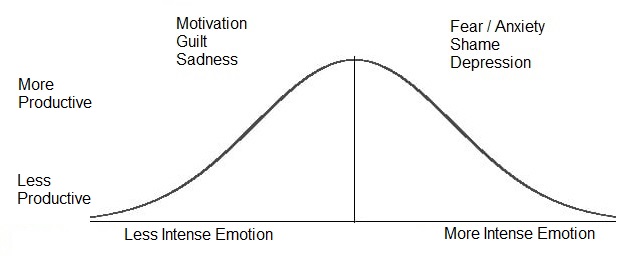
Guilt keep us in check, but when it reaches a certain point, it becomes counterproductive shame. Depression can be caused by many factors, one factor is too much sadness, or unresolved grief. Anxiety can be helpful for motivation to self actualize, but if too intense, it can paralyze one in fear.
The desire to grow is a healthy emotion, but it must be checked and balanced by healthy expectations and realistic steps that work in the moment, even towards potentially outlandish long term goals. We must wait before we can reach our goals. We cannot self actualize in an instant, it is a life’s work.
Rebbe Nachman explains why sometimes we need to wait to self actualize.
If someone is trying to fall asleep and he cannot sleep, the answer is not to force himself to sleep. Because the more you force yourself to sleep, the more difficult it will become to fall asleep. And this idea is true for everything in the world; that you cannot force yourself too much. Because the more you force yourself in one specific area, the more you can unintentionally push yourself in the opposite direction.
TO BE CONTINUED
Chayei Moharan 431
Rebbe Nachman also teaches a deeper, Kabbalistic explanation on waiting during the Teshuva, or growth, process.
Also Teshuva (Repentance) is an aspect of Keter (Crown) because Keter is a language of waiting, like the verse states “Crown me / Wait for me a little, and let me hold forth; כַּתַּר לִי זְעֵיר וַאֲחַוֶּךָּ” (Job 36:2). And this is an aspect of repentance, like our sages of blessed memory said, “one who comes to purify himself is helped”. A metaphor is the parable of someone who comes to buy אֲפַרְסְמוֹן, sweet smelling spices, we tell him, Hamten! Wait!…
Kitzur Likutei Moharan, 6:4
The parable of Hamten is that of a storekeeper. When a customer requests foul smelling kerosene, the storekeeper directs him to the barrel to serve himself. When, however, a customer requests to purchase אֲפַרְסְמוֹן, sweet smelling spices, the storekeeper tells him, Hamten! Wait!… I want to come help you, because I want to smell the sweet smell, and enjoy the beautiful process of growth, with you.
So says God to us. This is a powerful lesson on accepting the struggle of the process. If God wanted us to be perfect, He could have created us that way. The process is the goal. The journey is the destination.
…This is because you must know, that when someone comes to purify himself and repent we tell him wait, this is because even though he needs to hurry fast to ??? On his soul and escape from within the darkness, and even so, he should not become confused ??? of ideas when he sees his distance from prayer and all the holy things. Because he is forced to wait until he merits a complete fixing, and to go in the level according to what יוֹרֵהוּ the true tzaddik, because it is impossible to enter in one moment to the holiness“
Kitzur Likutei Moharan, 6:4
For more on accepting one’s status vs continuing to set new goals, see this post. See here for more on perfectionism and the general nature of climbing levels.
אַף עַל פִּי כֵן אַל תְּהִי נִבְהָל כְּשֶׁאַתָּה רוֹאֶה בִּסְפָרִים קְדוֹשִׁים עִנְיְנֵי עֲבוֹדוֹת הַרְבֵּה אַל תְּהִי נִבְהָל מִפְּנֵי זֶה לֵאמר מָתַי אוּכַל לְקַיֵּם אַחַת מֵהֵנָּה מִכָּל הָעִנְיָנִים הַלָּלוּ, מִכָּל שֶׁכֵּן כֻּלָּם כִּי צָרִיךְ לְבַל יִהְיֶה מְבהָל לַחֲטף הַכּל בְּבַת אַחַת רַק לֵילֵךְ בְּנַחַת בְּהַדְרָגָה מְעַט מְעַט וְלא שֶׁיְּהֵא מְבהָל וּמְבֻלְבָּל שֶׁרוֹצֶה לְקַיֵּם וְלַחֲטף הַכּל בְּבַת אַחַת וּמֵחֲמַת זֶה נִתְבַּלְבֵּל לְגַמְרֵי כְּמוֹ שֶׁיֵּשׁ בִּשְׂרֵפָה חַס וְשָׁלוֹם שֶׁמֵּחֲמַת הַבֶּהָלָה חוֹטְפִין מַה שֶּׁאֵין צְרִיכִין רַק צָרִיךְ לִנְהג בְּהַדְרָגָה בְּנַחַת מְעַט מְעָט וְאִם לִפְעָמִים אֵין הָאָדָם יָכוֹל לַעֲשׂוֹת כְּלָל בַּעֲבוֹדַת ה מַה לַּעֲשׂוֹת ? ! אנֶס רַחֲמָנָא פַּטְּרֵהּ וְיַרְגִּיל עַצְמוֹ לִכְסֹף וּלְהִתְגַּעְגֵּעַ וּלְהִשְׁתּוֹקֵק תָּמִיד אֵלָיו יִתְבָּרַךְ כִּי הַהִשְׁתּוֹקְקוּת וְהַכִּסּוּפִין בְּעַצְמָם הֵם דְּבָרִים גְּדוֹלִים מְאד וְרַחֲמָנָא לִבָּא בָּעֵי וְיֵשׁ בְּעִנְיָן זֶה כַּמָּה שִׂיחוֹת וְסִפּוּרִים יָפִים שֶׁשָּׁמַעְנוּ שֶׁהֵם עֵצוֹת גְּדוֹלוֹת טוֹבוֹת מְאד, לְהַרְגִּיל עַצְמוֹ בַּעֲבוֹדָתוֹ יִתְבָּרַךְ אַךְ אִי אֶפְשָׁר לְבָאֵר דְּבָרִים אֵלּוּ בִּכְתָב הֵיטֵב וְהַמַּשְׂכִּיל הֶחָפֵץ בֶּאֱמֶת יָבִין קְצָת
One must not become afraid when he sees in the holy books, the many different Avodos (the many aspects required in the service of God and personal growth, such as studying Torah, performing the Mitzvot; and praying, begging and pouring out his heart to his Maker). Do not become afraid and say, “how will I be able to complete even one of these tasks, let alone all of them?” You must prevent yourself from becoming afraid and attempting to snatch everything in one grab; rather go with peace, in steps, little by little. Do not become afraid or confused so that you want to snatch everything in one grab, which results in you becoming totally disoriented; such as during a fire, God forbid, whence due to the confusion they grab what they don’t need.
And if there are times where a person cannot accomplish everything in the service of God, so what can he do? אנֶס רַחֲמָנָא פַּטְּרֵהּ
And one should accustom himself to ??? to Hi, the Blessed One. Because these themselves are great things, and the Merciful One wants your heart. There are many stories and but one cannot express this properly in writing…
Sichot HaRan 27
Selena Gomez sang, “I needed to lose you to love me”. Interpersonal relational dynamics are often reflected in intra-personal parts dynamics, à la Internal Family Systems and attachment theory. Sometimes we need to lose our old selves to grow into our new selves, like the caterpillar blossoming into the butterfly, or the phoenix bursting into flames.

“And the day came when the risk to remain tight in a bud was more painful than the risk it took to blossom” wrote Anais Nin. There is only so long we can limit ourselves for others; or for the other part of ourselves which are scared of our growth. Sometimes people try to keep themselves small for protect themselves, telling themselves; I can’t fail if I quit. But this strategy only proves more painful in the long run. We must try and fail, to succeed. We all do really want to change. Sometimes however we repeat counterproductive patterns for a while until we eventually learn to change them, and progress to the next step and level, of the game of life.
When a person wishes to enter into the service of God, and the supplies to everyone, even someone on the lowest of levels, even someone who is literally “in the earth”, he must at all times advance and rise from level to level. Now, every time a person is about to move from one level to the next, each in his own way, he has to encounter the full force of the kelipot all over again. These are all his desires and fantasies and wild thoughts, the distractions and obstacles that are ranged against a person at every moment and that try to prevent him from entering the gates of holiness.
This often leads to great confusion in the minds of honest people who have truly worked hard on themselves. Suddenly they find all these old desires, confusions and obstacles rising up against them. They start thinking that they must have fallen from their level, because before this, they had rest from all these desires and confusions; they lay dormant. Now that they have reappeared, these people come to think they must have fallen down…
LM 1:25, RSM p9

…BUT THIS IS NO FALL! What is happening is that the time has come for them to advance from one level to the next, each in his own way. This is why all the desires and confusions and obstacles, all the “crookedness in the heart”, are stirred up against them with fresh force.
Each time this happens, you must fortify yourself and refuse to lose heart. Strengthen yourself against these forces and break them anew.
LM 1:25, RSM p9
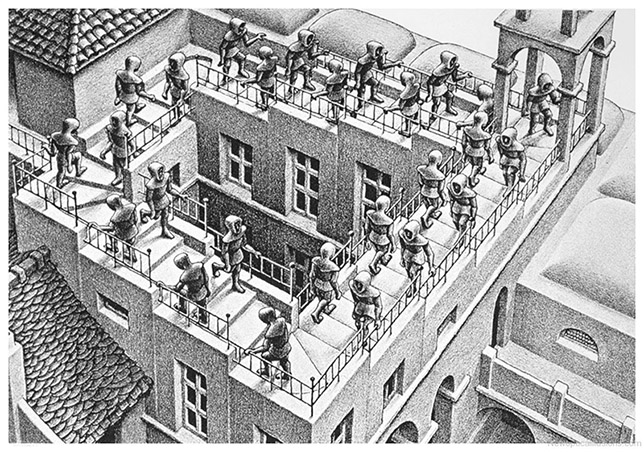
Often the feeling of falling to a lower level, is actually you entering the lower level of the next higher world. Like in a video game where you go from World 1 Level 3 to World 2 Level 1, one should not be disappointed if he sees himself falling from Level 3 to Level 1. He is actually moving upwards, and growing into a whole new world.
This is not to excuse actual setbacks. Strategy to overcome setbacks is a separate discussion. But if we use a self compassion lens to view our setbacks, when we were struggling and failed the most, is when we actually deserved the most compassion and admiration; for trying so bravely despite our greatest challenges and difficulties. If we measure ourselves by effort rather than by success, our greatest achievements are when we tried so hard, yet failed. See The Story of the Tzaddik who got Depressed
Rebbe Nachman taught it is good to turn your learning into prayer. Let us end with Rebbe Natan’s heartfelt prayer:
Teach me, dear God,
to make a fresh start;
to break yesterday’s patterns;
to stop telling myself
I can’t,
when I can;
I’m not,when I am;
The Gentle Weapon, p. 101
I’m stuck,
when I’m eminently free.


Leave a Reply