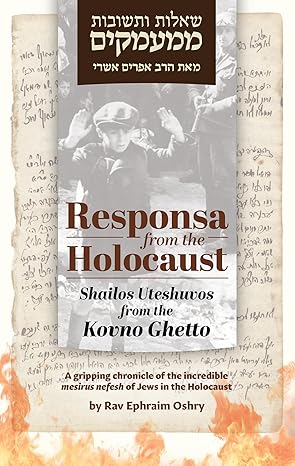
I wanted to explore a fascinating dialogue between a Holocaust survivor suffering from PTSD, and her Rabbi’s clinically brilliant response.
This is an excerpt from Responsa from the Holocaust, written by Rabbi Ephraim Oshry, a survivor himself, Rabbi of the Kovno Ghetto during the Holocaust.
(Thanks to Rabbi Jeremy Tibbetts for the translation, for introducing me to this Teshuva on Yom HaZikaron, and for the encouragement to write this post).
Original Hebrew below. Bold emphasis mine.
Question: After God granted us to emerge from darkness into great light—when the bars of our yoke were broken and we were freed from being slaves to wicked men—I was asked by a young woman from a distinguished family: the accursed Germans had tattooed a number on her arm, as was their practice with camp prisoners, for each prisoner had a number by which they were recorded among the living and the dead—who would live and who would die, who had reached his end and who had not but would continue in forced labor, for the wicked kept exact statistics about everything. Now, after liberation, she wishes to remove this number through plastic surgery, because it brings before her the terrors of those dreadful days when her fate was in their hands for punishment or mercy. She believes that if she erases this terrible number from her arm, she may remove from herself the memory of those bitter days that torment her spirit and give her no rest. Whenever she looks at this detestable inscription, this number of horror, the scenes of terror she witnessed in the camps of confinement and extermination rise again before her eyes, and the multitudes of prisoners who were destroyed there pass before her mind. She asks whether, according to halakhah, she may remove this inscription from her arm, in the hope that by doing so she may forget the suffering and grief she endured and find peace for her embittered soul.
Answer: The Rema rules (O.C. 301:23) that the green badges decreed by the government for Jews to wear on their clothing may be worn on Shabbat, even if not sewn on, because they are considered a garment. From this it appears that even something imposed by an evil regime to shame the Jews—such as a green cloth meant to disgrace and humiliate them—is nevertheless regarded as an honor to Israel. So too here: this number that the Germans, may their names be blotted out, engraved on the arms of Jews as a badge of disgrace—meant to declare that those bearing such numbers were not to be regarded as human beings but as animals, upon whom anything could be done, to be slaughtered like beasts—does not degrade us or diminish our honor. On the contrary, this number is for us a badge of honor and glory, while for those despicable murderers it is an eternal memorial of sin and unforgivable guilt for their plot to destroy a holy nation. Therefore, this shameful inscription, this dreadful number engraved on the arms of the thousands who were in the camps of imprisonment and destruction, serves us as a sign of honor and remembrance, so that we remember what this German Amalek did to us. God forbid that we forget this or erase from our hearts what these wicked men did to us. Especially now we are doubly obligated to remember their evil and never divert our minds from the horrors they perpetrated, for we see that the accursed Germans spare no effort to make the world forget their deeds. As long as the blood of our holy brothers and sisters cries out from the ground demanding vengeance, this mark engraved on the arms of the camp prisoners stands as a sign crying out: “Let the vengeance of Your servants’ spilled blood be known among the nations before our eyes.” Therefore it is forbidden for this woman to remove the number from her arm, for by doing so she would aid the wicked Germans in erasing the memory of their atrocities and strengthen those enemies who brazenly deny everything. Rather, she should bear this mark with pride and dignity, and in its merit she will yet live to see the time when God repays His enemies with vengeance, speedily in our days.
The clinically relevant piece in the question is that this woman believed that removing her triggers would help her mental health and reduce her traumatic flashbacks.
While this may seem reasonable on the surface, it is actually quite counter productive in the long term once we understand how trauma impacts us.
Avoidance is one of the core symptoms of PTSD. The DSM 5 describes:
- Persistent avoidance of stimuli associated with the traumatic event(s), beginning after the traumatic event(s) occurred, as evidenced by one or both of the following:
- Avoidance of or efforts to avoid distressing memories, thoughts, or feelings about or closely associated with the traumatic event(s).
- Avoidance of or efforts to avoid external reminders (people, places, conversations, activities, objects, situations) that arouse distressing memories, thoughts, or feelings about or closely associated with the traumatic event(s).
The problem with avoiding traumatic stimuli is that it reinforces the belief that one is in distress. Every time one is triggered by a stimuli and avoids it, they are telling themselves that they are threatened, and that they are incapable of dealing with the distress. Each time they do this, they strengthen this belief, which leads to increased distress the next time they are triggered.
Rabbi Oshry incorporates many powerful therapeutic concepts in his response; Exposure, Reframing, and Post-Traumatic Growth.
Firstly, he did not encourage avoiding triggers; rather he encouraged facing them head on. In therapy this is known as Exposure. By gradually facing distressing triggers in a safe environment, we learn to believe and feel that we are actually safe in our current situation. We break the cycle of experiencing increasing feelings of distress from stimuli that are objectively non-threatening. We learn to feel calm and safe even while exposed to painful triggers or memories. While it is extremely painful to relive painful experiences, if we do not face them and reprocess them, we are essentially stuck in the painful past, which is even more painful.
Secondly, Rabbi Oshry challenges the Nazi’s attempt to dehumanize the Jews. He reframes the “badge of disgrace” as a “badge of honor and glory”. Often, innocent survivors of abuse can blame themselves for what was done to them. But to the contrary; the shame belongs to the abusers.
Finally, Rabbi Oshry helps this woman move from a victim mindset to giving her a sense of purpose, a mission. Post-Traumatic Growth describes how one can connect with an “increased sense of personal strength” as a result of their traumatic experiences. If we conceptualize trauma as feeling helpless and a lack of control, the growth that comes after is realizing how strong one really is, both in one’s ability to have survived painful past experiences, but also to see how one’s experiences allow them to grow, to find purpose, to help others.
שו״ת ממעמקים ד:כב
שאלה: אחרי שזיכנו השי״ת לצאת מאפילה לאור גדול, כשנשברו מוטות עולנו ונשתחררנו מלהיות עבדים לעבדי בישי ‘ימ״ש, נשאלתי על ידי אשה אחת צעירה לימים ובת טובים מאחת המשפחות הנכבדות, היות שהגרמנים הארורים חקקו על זרועה בכתובת קעקע כי כן נהגו לחקוק על זרועותיהם של כלואי המחנות מספר כי כל אסיר היה לו מספר ולפי המספרים האלה הם נכתבו בספרי החיים והמתים, מי לחיים ומי למות, מי בקצו ומי לא בקצו אלא עליו עוד להתענות בעבודת פרך, כי על הכל נהגו הזדים הארורים סטטיסטיקה מדויקת, ועכשיו לאחר השחרור ברצונה להעביר על ידי ניתוח פלאסטי את המספר הזה המעלה לפניה את זכרוז האימים של הימים הנוראים האלד. עת היתד. נתונה בידם לשבט ולחסד, והיא חושבת כי באם תמחוק מזרועד. את המספר האיום הזה, תוכל להסיר מעליה את זכרון מועקת הימים המרים הללו המעבר את רוחה ולא נותן לה מנוח, כי מדי פעם בפעם כשהיא שמה את עינה על הכתובת המתועבת הזאת, מספר הבהלות, נצב לפני עיני רוחה שוב מחזה הזועות שהיא ראתה במו עיניה במחנות ההסגר והשמדה, וכבני מרון עוברים לפני עיני רוחה המון הכלואים שהיו אתר. שהושמדו שם במחנה.. והיא שואלת אם מותר לה על פי הדין להעביר מעל זרועד. את הכתובת הזאת, אולי על ידי כך תוכל לשכוח את כל הצרה והיגון שעברו עליה ותמצא מרגוע לנפשה המרה.
תשובה: בשו״ע או״ח סימן ש״א סעיף כ״ג פסק הרמ׳״א: ואותן עגולים ירוקים שגזרה מלכות שכל יהודי ישא אחת מהן בכסותו מותר לצאת בהן אפילו אינו תפור בכסותו רק מחובר שם קצת’ (א״ז). ומסיק האור זרוע מפני דחשיב מלבוש. נראה מזה כי דבר שהמלכות הרשעה רוצה לבייש בו את ישראל ,כדי שישא חתיכת בגד ירוק על בגדיו כדי לביישו ולהשפילו בעיני העמים, אפילו הכי פסק הרמ״א בשם ד,אוד זרוע שמותר לצאת בו בשבת, כי אדרבה זהו כבוד לעם ישראל וזהו מלבוש. ולפי זה בנידון דידן גם כן הכי הוא, המספר הזה שהגרמנים ימ״ש חקקו על זרועות בני ישראל כאות קלון שישפיל אותם בעיני כל רואם לאמור, כי הללו בעלי המספרים החקוקים על זרועותיהם אינם נדןשבים לבני ארם אלא כבהמות נדמו והרשות ניתנה לעשות בהם כרצונם, להוציאם להרג ולטבח כבהמות ממש, לא רק שאין בו במספר כזה כדי להבאיש את רוחנו ולהשפיל את כבודנו, אלא אדרבה, מספר זה הוא לנו לאות כבוד ולתפארת, ולהם, לרוצחים המתועבים ימ״ש וזכרם הוא למזכרת עון ולחטאת עולם שלא ניתן לסליחה ולכפרה, על זממם אשר זממו להשמיד גוי קדוש שלא ישאר לו שאר ושארית, וכל מגמתם היתה שאם אחד מישראל אפילו אם יצלח לברוח מהמחנה ולהמלט על נפשו, שכל מוצאו יהרגנו, כי תיכף ומיד יוכר על ידי הכתובת הזאת החקוקה בזרועו, כי הוא אחד מישראל, העם לטבח יובל בצאן. לכן בודאי כתובת מבישה זאת, מספר איום זה החקוק בזרועות אלפי האנשים שהיו אי פעם במחנות ההסגר והשמד, משמש לנו לאות כבוד ולזכרון, שזכור נזכור ״את אשר עשה לך עמלק״ גרמני זה, וחלילה לנו לשכוח את הדבר הזה ולמחוק מלבנו את כל אשר עוללו לנו הרשעים הללו, חיתי יער בדמות אדם, זרעו של עמלק בני בניו של המן הרשע. וחובה כפולה ומכופלת מוטלת עלינו לעת הזאת דוקא לזכור את כל רשעתם ולא להסיח את דעתנו אף רגע מכל הרעה אשר עוללו לנו, כי רואים אנו איך שהם, הגרמנים הארורים ימ״ש אינם חוסכים כל מאמץ, ועושים את הבל כדי להשכיח מהעולם הגדול וממנו את זכרון מעשיהם הרעים, ובעוד שקול דמי אחינו ואחיותינו הקדושים והטהורים צועקים אלינו מן האדמת ודורשים נקם ושילם, משמש אות זה החקוק על זרועות כלואי המחנות כאות מאות קורא ומכריז: יודע בגוים לעינינו נקמת דם עבדיך השפוך, כי דורש דמים אותם זכר, לא שכח צעקת ענרים, ולכן, ידין בגוים מלא גויות, מחץ ראש על ארץ רבה, ועם בני ישראל, זה העם המושפל ומעונה עוד ירים ראש בין הגויים יפדה וירבה עד מאוד, ישגה ויפרוץ כימי עולם וכשנים קדמוניות. לזאת הם ושלום לאשה הזאת להעביר מזרועה המספר הזה, בי בזה היא נותנת יד לפושעים הגרמנים הארורים, והיא עוזרת להם להשכיח את מעשי הזועה והאימים שעשו לעם ישראל, ויש בזה משום חיזוק לשונאים הללו המתחצפים ומכחישים את הכל, כאילו אנו היהודים שמים להם רק עלילות דברים ותואנה אנחנו מבקשים מהם, אלא אדרבה עליה לשאת את ד.אות הזה בגאוה וגאון, ובזכות זד. היא תזכה לראות עת נקם ישיב ה׳ לצריו, בביא״ס


Leave a Reply